Rebuilding a brick front garden wall
A low brick wall at the front of a house does two jobs. It marks the line of the garden, and it shows the street what the house is built from. When one has to come down, the new section must match the old in colour, bond and height, or it reads as a patch even when it is perfectly sound. This guide works through a wall 6 metres long and 0.9 metres high, from the footing up, and counts the bricks, cement and sand it takes.
Herne Bay BM is the Herne Bay delivery site of Discount Builders Merchants (KENT) LTD, the builders' merchant at Lower Road, Northfleet, DA11 9BB. There is one yard, and orders are placed on www.discountbm.co.uk.

Check the old wall and the ground
Before anything is ordered, take the old wall down to its footing and look at both. A front wall that leans towards the path has often been standing on a footing too shallow for the soil. Dig a trench along the new line first, so the depth of firm ground is known before the concrete is measured. If the soil is soft or wet, the footing goes deeper, and the amount of concrete goes up with it.
Count the courses between the coping and the ground on the old wall, and note the bond and whether the header bricks show on the face. A wall built in one piece has courses of the same height all the way along, and a new section that starts at a different height shows at the joint. The new work has to repeat both the height and the bond.
Choosing a brick that matches
Yellow stock brick is the usual match for the older fronts of many Kent roads, and it weathers to a grey that new bricks take years to reach. Take a sample to the yard and stand it against the wall both dry and wet, because brick darkens when it is soaked. The colour on the day can differ from the colour in the bag, and the wet sample is the one to trust.
Buy the whole wall in one batch. A second delivery some months later seldom sits exactly with the first, and a wall that changes shade along its length looks worse than a single course of new brick. Sound salvaged bricks go on the face, and any that are cracked go behind the new work, where nobody looks.
The footing and the damp course
A low front wall stands on a concrete footing that spreads its weight into the ground. The footing is usually about twice the width of the wall, and its depth comes from the trench, not from a table. Pour it in one go, so that it has no cold joint, and let it set before the first brick is laid on it.
A damp proof course goes in just above the ground, so that the wall does not draw water up from the footing into the brick. A strip of plastic or a bituminous layer does the job. It is laid level across the full width of the wall before the next course starts, and it is checked with a spirit level, since a course that falls to one side carries water to that side.
Laying the courses
Work the wall out from its two ends, with a line stretched between them for each course. Hold a gauge rod against the old wall so that every course lands at the height the old bricks set. Spread the mortar on the bed rather than throwing it, and keep the joints to the thickness of the old ones, close to ten millimetres, so the new face reads the same as the old.
Check the wall for plumb every few courses with a spirit level, and watch the line as the wall rises. A wall that is out of plumb by a few millimetres at the bottom shows as a lean at the top, and the difference is hard to put right once the mortar has set. Clean off the mortar smears as you go, while they are still soft.
Coping, cleaning and the finish
A coping protects the top of a low wall from rain, and it stops water running down the face and staining it. Bricks laid on edge make a simple cap, and a row of bricks laid flat with a slight fall to the front is a common alternative. Choose the cap to suit the face, and bed it on a full layer of mortar so that no water sits in a gap under it.
Clean the face once the mortar has gone off. A soft brush and clean water take off the smears without scouring the surface, and a stiff brush used hard on a soft brick removes the skin that carries the colour. A new wall takes a few weeks to settle its colour, so judge the match after that rather than on the first day.
Rules of thumb
| One-brick wall | Solid wall one brick thick: about 120 bricks to the square metre, before cuts. |
|---|---|
| Wall area | Length times height in metres. Take off any opening before the bricks are counted. |
| Cuts and piers | Add about a twentieth for the cut bricks at the ends, and for any pier. |
| Mortar for brick | About seven bags of cement and a tonne of sand for each thousand bricks, measured in buckets to one of cement to five of sand. |
| Footing | Length, width and depth in metres give cubic metres. Each cubic metre of 1:5 mix takes 13 bags of cement and 1.9 tonnes of ballast. |
The shop has calculators that turn a measurement into a quantity.
Worked order: A 6 by 0.9 metre front garden wall in yellow brick
| Product | Quantity | What it is for | Cost |
|---|---|---|---|
| Cookbridge Yellow Multi Stock Bricks | 681 at £0.65 | The wall is 6.0 m long and 0.9 m high, so 5.4 square metres of one-brick wall. At 120 bricks a square metre that is 648, and a twentieth for the cut ends and the piers makes 680.4, rounded up to 681. | £442.65 |
| 25kg Mastercrete Cement (plastic) | 13 at £7.99 | The mortar takes about seven bags for each thousand bricks, so 681 bricks take about 4.8 bags, rounded to 5. The footing is 6.0 m by 0.45 m by 0.2 m, which is 0.54 cubic metres. At 13 bags a cubic metre that is 7.0, rounded up to 8. Together, 13. | £103.87 |
| Bulk Bag Ballast 20mm | 2 at £40.00 | The footing is 0.54 cubic metres, and ballast weighs about 1.9 tonnes for each cubic metre, so about 1.03 tonnes. A bulk bag holds about 0.8 tonnes, so two. | £80.00 |
| Bulk Bag Soft Building Sand Nepicar | 1 at £45.83 | The mortar for 681 bricks is about 0.68 tonnes of sand, and a tenth more for waste brings it to 0.75 tonnes. One bulk bag holds about 0.8 tonnes, so one is the order. | £45.83 |
| Goods | £672.35 | ||
| Collected from Lower Road, Northfleet | £0.00 | ||
| Total ex VAT | £672.35 | ||
| Total inc VAT | £806.82 | ||
Bulk bags: the bags in this order are counted at about 0.8 tonnes each. That is a planning figure. The shop does not publish a weight for a bulk bag, so confirm the number of bags with the yard before ordering.
Not in this order: The coping stones, the damp proof course strip, the wall ties if the wall has a second leaf, and any railings or piers that stand above the wall.
The quantities are a starting point for a job of this size. Put the same goods in a basket on www.discountbm.co.uk with your own postcode to see the figure for your order, or send the yard your list.
On the shop today
The products this guide talks about, from the shop's Bricks aisle. Prices last checked .
-
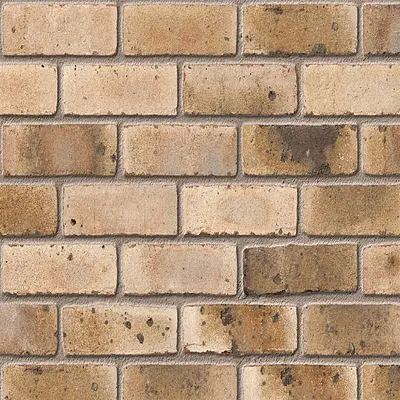 Cookbridge Yellow Multi Stock Bricks
each
£0.78 inc VAT
£0.65 ex VAT
In the yard
-
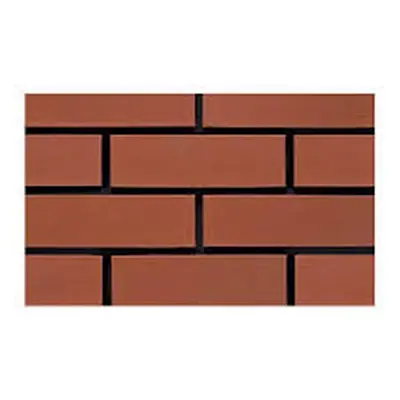 Red Class B Engineering Perf
each
£0.60 inc VAT
£0.50 ex VAT
In the yard
-
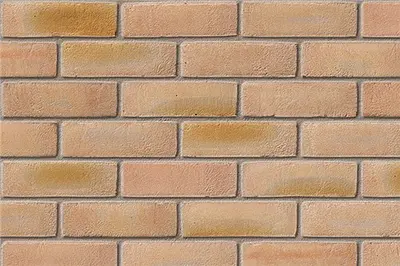 Leicester Yellow Bricks Non Best
each
£0.49 inc VAT
£0.41 ex VAT
In the yard
-
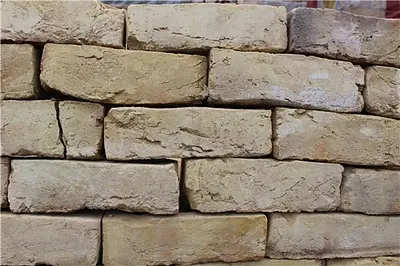 Second Hand Yellow Bricks
each
£1.44 inc VAT
£1.20 ex VAT
In the yard
-
 Mayfield Yellow Stocks Bricks
each
£1.30 inc VAT
£1.08 ex VAT
In the yard
-
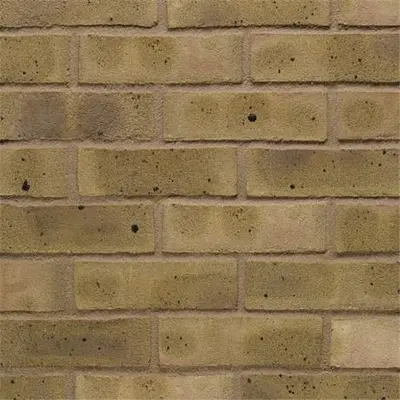 Hurstwood Yellow Multi
each
£1.20 inc VAT
£1.00 ex VAT
In the yard
-
 Regrade Bricks Yellow/Blue/Red
each
£0.50 inc VAT
£0.42 ex VAT
In the yard
Prices are the shop's prices today. Stock and ordering are on www.discountbm.co.uk.
Bricks for CT6 front walls and patches See all Bricks on the shop
Delivery to Herne Bay
- CT6
-
Ask the yard about this district. It is not a shop price.
More guides for Herne Bay
- A garden store in blockwork on a base Blockwork walls for a small garden store in CT6: the concrete base and sub-base, the door lintel and damp course, and a worked order collected.
- Rafters and decking for a porch roof Rafters, wall plate, fascia and OSB decking for a small lean-to porch in CT6, with the fall and the salt wind in mind, and a worked order collected.
- Fabric and edging for a gravel front garden Replacing a lawn with a shingle bed in CT6: the ground, the fabric, the edging and the stone depth, with the tonnes and bags worked out in a collected order.